|
I’m not the type to complain much about my disability. I rarely feel sorry for myself for being in a wheelchair. It’s pretty much natural to me. I’ve accepted that and there is nothing that is going to change it until a cure for Spinal Muscular Atrophy is found. I have the motto, why worry.
I know many people get depressed about being in a wheelchair, but I’m not one of them. I mean, sure it sucks, but its like my late father, David Lawniczak used to say. There is no use in crying over spilt milk. I guess I can see how being in a wheelchair can be depressive to some people and frustrating when you want to move, but can’t do it without help. Still this is one of the few things I’ve actually accepted about my life. So, it’s one of the few things I don’t complain about.
What I do complain about is pain. I hate pain. I am pretty sure most people with SMA experience pain a lot different than the average person. I can just bump into something and have it feel like I’m being stabbed. I admit it. I’m a baby about it. Well, pain is why I’m writing this blog. If there is just ONE thing that I could mention that sucks about being in a wheelchair it is experiencing pain.
I’m on a regular regime of pain medication. Tylenol 4 with codeine is my friend. It takes away the pain in my back and my legs most of the time, but rarely touches pain in my hip. If I could trade being in a wheelchair forever for not having pain ever, I’d stay in the wheelchair. It’s not so bad if there is no pain, but when it hurts I just want to cry.
(more…)
|
|
|
Burton, Michigan – October 29, 2008: Muscular Dystrophy Patients United is announcing its second annual Winter Holidays Adoption Program. This program is specifically for families who have children with Muscular Dystrophy. Last year, MDP United was able to assist three families and this year the organization hopes to help between five and ten. MDP United has found low income, struggling families with children who have Muscular Dystrophy. With soaring medical costs and extended needs that go beyond the care of the average child, many of these families just don’t have the extra money to provide their children with an amazing holiday.
This year, MDP United will be listing between 5-10 families on their website in the coming weeks. Volunteers can adopt a family to help provide the family with presents. Each child in the family will have a wish list, of what they want for the winter holiday they celebrate this year. With the cost of living so high for everyone, families with disabled children are truly struggling and assistance during the holiday season is especially important.
While the child with the disability is the only required adoptee, siblings will also have their wish lists posted. MDP United would love for multiple volunteers to adopt one family, so that each child in the family gets the wish they truly want this year. Additionally, parents will be given the option of listing 2-3 stores where they would like gift cards, to help purchase more presents or necessities for themselves and their children this holiday season.
If you would like to volunteer and adopt a family, please email Dominick. Also, you can check back regularly to find a list of our wish children, who you can adopt this year. As always, you can donate money to MDP United through Paypal and the organization can purchase the presents for you. A list of volunteers will be displayed on our main homepage, in thanks for their donations.
About MDP United:
Muscular Dystrophy Patients United (MDP United) was founded by Dominick Evans who has Spinal Muscular Atrophy. As a former ambassador for another MD organization and a patient dealing with every day disability issues, Dominick understands exactly what individuals with Muscular Dystrophy go through on a daily basis. The other organizations, while they are able to help in their own way, do not provide all of the services those with Muscular Dystrophy need to live healthy, happy, and productive lives.
(more…)
|
|
|
I haven’t written anything on the Muscular Dystrophy Association in a long time. I feel it’s time to formally express my disappointment at some of the latest things that MDA has been doing. Before I get started, MDA is a valid organization in one way. It is doing extensive research into curing the 40+ neuromuscular diseases covered under their organization. That’s about the only good they’re doing. I won’t dispute that fact. What I do dispute is their promises of doing more for all patients with MD.
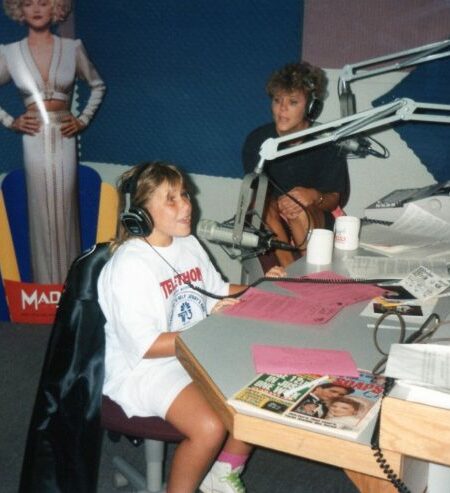
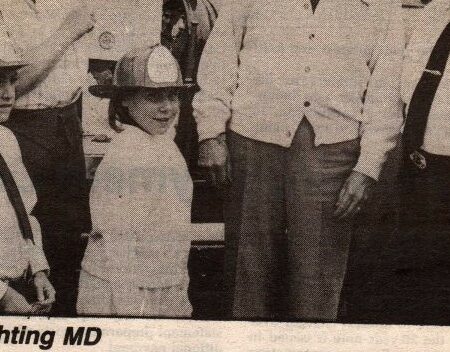
As a child, I thought MDA could do no wrong. MDA diagnosed my disability (wrongly, I was diagnosed with Werdnig Hoffman (SMA I) when I in fact have Kugelberg-Welander (SMA III)) at age 4. I was the MDA poster child for Northwest Ohio in 1990 and 1991. I was the Ohio State poster child/goodwill ambassador in 1992 and 1993. I was committed to helping raise thousands (if not millions) of dollars for an organization I always thought would have my back.
Things started declining in the early 1990s. In this decade, MDA cut its Camp program from adults. When I was a child, camp had multiple adults attending. For some adults, this was the only vacation they ever got. This is the only time they were able to get out of their home and away from their family (if they lived with parents, able-bodied siblings, spouses, or otherwise). It was their vacation and necessary to their health and well-being. I can’t tell you how much I learned from the adults with various forms of Muscular Dystrophy. If nothing else, they gave me hope of a future. I saw actual adults surviving into adulthood with diseases doctor’s said could possibly kill me or my friends before we finished adolescence. That was one of the most important lessons I learned and without seeing actual adults with MD, I wouldn’t have learned it.
Well, in the 90s, adults were cut from the camp program. MDA said they did it to save money, but it is now apparent this was a first move in shutting adults out of MDA programs. The new rule was, you had to be 21 and under to attend camp. Well, now that rule has been cut, too. This year was the last year those with Muscular Dystrophy between the ages of 18 and 21 were able to attend camp. Now the rule is, you must be under the age of 18 to attend camp (6-17). There have been a plethora of excuses from MDA for why they’ve decided to cut the age again. Saving money was the biggest reason. Another excuse was it cost too much to insure both children and adults, so the adults just don’t get camp.
If that was the only thing that was being taken away from adults, I might turn the other cheek. I do think MDA Camp was vital to the well being of all who attended regardless of age, but it is pretty clear MDA, as a whole, has stopped caring. The organization is about making money; money which pays the CEO of MDA more than the president of the United States makes in one year. He makes over $399,000 per year. Just for reference, that could buy 16, high quality power wheelchairs for those with Muscular Dystrophy or 100 decent manual wheelchairs. This is where your money is going instead of to the patients.
I hear many parents say, MDA has been excellent to me and my children. Yes, they were excellent to me when I was a child, too. Now that I’m adult, MDA has pretty much thrown me to the wolves. Case in point, a few years ago, I tried to go to the MDA in my area. This is not the MDA I grew up with, by the way. This is one in Michigan where I live now. I asked them how long I should schedule my ride for, since I have to travel by public transportation. They told me no more than an hour. So, I told my ride to pick me up within an hour and a half, just because sometimes appointments do run over.
(more…)
|
|
|
When I was a child of 10, I gave my first speech. Back then, I had a speech writer, but eventually, I knew exactly what to say and how to get my message across. I don’t know why, but one of the few skills I’ve been given is the ability to talk and share myself and my thoughts with the world. Whether writing, speaking or otherwise, I know that I have strong opinions and strong motivations for things that I believe in strongly.
I want to get back into public speaking. I feel I have a story to tell. I have plenty of experience in the following categories:
-disability
-inspiration
-the arts
-comedy
-GLBT issues/issues of gender identity
-overcoming abuse
-overcoming obstacles in general
-non-traditional religion
I’m not sure where exactly to start. Travel seems like it will be an issue for the time being, unless I have paid travel. It would be worth it though, to get some local experience and re-build up a portfolio.
(more…)
|
|
|
So, I’ve received emails and comments from people in the BIID community defending themselves. That’s fine. Seriously, I expected this to happen. What I didn’t expect was the following things:
1. Nearly every person in the BIID community that has contacted me has resorted to name calling and trying to anger me by saying things to try and hurt me
2. The BIID community keeps saying that I’m trying to present my view as fact
First, let me say that I don’t really care what any of you think. I know who I am and I am happy. Calling me “Dominica” and “she” and “bitch” just makes me laugh. Why would I really care what you think of me? I don’t even know you people. Sticks and stones and all. Furthermore, using that as your argument really shows that you have no other way of defending yourself. You try to point out others shortcomings or what you deem as shortcomings to try and win an argument. All that does is make you look bad.
Secondly, I listed the article as “My Perspective”. Since when does My Perspective mean, “The facts according to Dominick?” I don’t pretend to know all the facts nor present MY opinions as facts. It is what I believe based on knowing someone with BIID personally, based on what I’ve read of those with BIID (from their own experiences) and based on the minimal amount of documented research by psychological professionals, on the topic.
To make things more simple (and this is the last time I plan to write a blog about this unless some “massive research” comes to light on this topic or unless BIID sufferers try to pass some sort of bill legitimizing their right to the services so scarce to the physically disabled), my biggest problems with BIID are this:
#1. People with BIID seem to have it in their minds that their only treatment option is hacking off a limb, paralysis or making themselves disabled in some way. This is what they’ve said in their own posts. “The only cure is to become disabled.” That’s their words not mine.
My thought is that (and science will back this up) if a person has it so ingrained in their mind that there is only one solution, they shut down their mind to the possibility of other solutions. Sure, medication and behavioral therapy won’t work if you firmly believe in your mind the only solution is to become disabled. That is what I meant by saying that many BIID sufferers do not try to get better, because they accept only one possible “treatment” option and I use the term treatment very loosely.
Note: Upon reading stories of people with BIID, I’ve come to a conclusion.
1. Many with BIID have admitted that they have:
A. Parents who were/are either alcoholics, drug addicts, and/or excessively overbearing
B. A time in their life when they were abused (sexually, physically and even psychologically)
C. Extended moments of isolation
D. A need to be noticed
While I know that anyone can be abused and have parents who are drunks and yet they can still be well adjusted, those with BIID that mention this admit they felt isolated from their parents, their psychologists, and that these incidents did affect them. With this in mind, couldn’t BIID be actually an attention seeking behavior? I wonder if those with BIID find becoming disabled a way to make themselves different or special, so they can receive attention and be noticed because they never got this from their parents? The excessive satisfaction those with BIID get from pretending seems to support the fact that a part of their immense pleasure comes from the attention/acknowledgment they receive.
It’s just a thought from my astute observation.
#2. There are some with BIID who (having disabled themselves) admit they get state benefits. These are state benefits geared towards the physically disabled. Do you know how hard it is for many of us to get and maintain these benefits? I do not think it is FAIR to a person born with a disability to be denied a wheelchair while someone with BIID is able to have the state purchase a chair for them. As a taxpayer, I don’t want to pay for someone who has BIID (or at least not physically disabled benefits). If a BIID sufferer gets benefits for the mentally disabled like therapy and what not, well I believe BIID is a mental illness, those benefits are fine.
(more…)
|
|
|
I keep getting emails about protesting the film Tropic Thunder. As a film critic who works quite a bit with Paramount, my own personal interest in this disability debacle is high. While I do believe our society has become desensitized to words that might be harmful and hateful to others, “retard”, “gay”, we’ve all used them out of context at least once in our life, I don’t believe that this film is the right forum for disability rights activists to try and change the way people see those who are intellectually disabled.
I have to agree on this issue with the executive editor of FilmSchoolRejects, Neil Miller, whose article was featured on CNN. He states that adults should be able to process this movie for what it is. They should be able to take the jokes with a grain of salt and realize this is a parody. Likewise, parents should heed the R rating, as it shows “inappropriate content” not suitable for those under the age of 18. So, why all the fuss and muss? Why go so over the top to get this film off the market?
I feel the pain of the disability rights groups protesting this movie, but as someone involved in creative endeavors I also realize that parody isn’t often PC. Do I believe Ben Stiller had malicious intents when he made this film? No. I don’t think Ben Stiller is prejudice in a way that he meant to cause malice and harm. Do I think that he tried to make this film over the top? Yes, I do. I think he tried to find ways to offend everyone just to get a laugh. Comedians are un-PC all the time, and yet we don’t see protestations of all of the crude things comedians say in clubs, on comedy specials or even on television shows.
If we’re going to attack this movie, why not attack Sarah Silverman’s self-titled show on Comedy Central? Silverman makes fun of anyone and everything including AIDS and abortion. I find her show to be equally offensive just for the sense of comedic irony. That’s part of what freedom of speech is all about. There are plenty of things I’d like to protest, when it comes to “Freedom of Speech”, but it just isn’t fair for me to have my say and then not let others have theirs.
(more…)
|
|
|
Now that I’ve had the time to actually sit down and go through Sean O’Connor from the Transabled website’s accusations against my opinion on BIID, I can actually explain a bit more about my “unique perspective” on being a disabled man in a wheelchair, who is also transgendered. I’ve been accused of being chickenshit, not posting comments (server problems prevented that) and having no comprehension of mental illness. Let me share my own thoughts on Sean’s response and how I feel I am qualified to speak out about BIID.
Sean says, “I don’t expect everyone to support BIID, but in truth, you can’t “disagree” with it. BIID is real.”
I believe that statement is all in the eye of the beholder. If a schizophrenic saw purple dinosaurs, I’m sure they would insist those dinosaurs were real, too. Don’t get me wrong. I do believe those who claim to have BIID have some mental disorder, but is BIID truly real in the sense that those who have it cannot be fixed without becoming disabled in some form? That remains to be seen. At the present time, I’d say no. I say no because those with BIID use the fact that brain scans show that their brains are different than the average, non-disabled human. That’s great, but that doesn’t signify BIID. It could signify any of the many mental conditions out there.
For instance, my son has both Bi-Polar Disorder and Asperger’s Syndrome. His brain scans are not the same as the average, non-disabled individual. Likewise, neurobiofeedback is showing remarkable progress in the changing of brain patterns and structure with many involved in this therapy actually improving and brain scans showing that their brains are reshaping to be more like the average brain. This also allows more functionality of the individual.
With this in mind why couldn’t neurobiofeedback be something those who believe they have BIID looked into as an option? See, those who are transgendered do not have this option .The difference is not in there being something different about the brain of the transgendered individual. In utero, the brain actually forms as male or female. Studies are showing FTMs don’t have (for lack of a better word) abnormal brains. They have normal, masculine brains. They just happen to be in the wrong body for what their brain signifies. Something like neurobiofeedback simply won’t change gender in a brain because there is logically, nothing wrong with the brain.
My biggest problem with the transabled community is not that I cannot acknowledge these people need mental help because they do. My problem is with their method in going about it. They refuse to accept any other explanation for what they have other than that it is BIID. They believe their only cure is to become disabled. While they say they’ve tried alternative therapies I have to ask, have they really tried? Prescription medicines can alter the brain’s perception, so there has to be a medicine to help with this because this is supposedly a disorder of the brain. Furthermore, if the condition was listed on the DSMV, the doctors are most likely going to try and treat this with a medication. I don’t feel those in the transabled community have portrayed this as being a viably acceptable option. For some, it seems it is there way (make me disabled) or no way.
I don’t believe any of them have truly tried to change through therapy and medication. I know it’s hard. I have watched my son struggle throughout his life. His entire life is a struggle, but he doesn’t stop living just because he is different. We’re all different and we all have to do what we can to adapt, disability or not. On that front, I believe my son is miles ahead of those who are transabled, many of whom are three, four and maybe even five times his age.
(more…)
|
|
|
When I first wrote about Devotees, Pretenders and Wannabes on the Literary Illusions opinion site I was reacting on my first impulses and instincts. At the time, I was utterly disgusted by those who would lie about who they were in such a harmful way that they desired to become disabled. The life of a person with a disability seemed glamorous to them.
That’s pretty offensive to someone who has a disability. Furthermore, I was highly disturbed by Devotees, Wannabes and Pretenders trying to compare themselves to the transgendered community. I’m both disabled and transgendered. I feel I have a unique perspective on the situation and how it feels to be compared to these incomprehensible human beings who think being disabled is the “cool” way to go.
Upon receiving a URL to a Newsweek article on the topic, I learned that doctors have a name for this. It’s called Body Integrity Identity Disorder (BIID). While those who say they suffer from BIID claim they are “transabled” there are a number of reasons why I feel they should not be compared to someone who is transgendered. To better understand this you have to understand what being transgendered is and means.
Transgendered people believe they were born in the wrong gender. It is a persistent feeling that won’t go away. Studies are showing that perhaps while in utero, the fetus is exposed to varying levels of hormones. For example, since I am FTM, it’s fairly likely that I was exposed to extra levels of testosterone making my brain form in a more masculine way. There are truly signs of transgenderism, especially from an early age. Looking back, I was constantly called a little boy by strangers who saw me as a baby and toddler. Even in the womb, the ob/gyn my mother saw was certain I would be born a boy, based on how I was carried and other factors. She’d been in the field for years and I was one of her biggest shocks when I was born biologically female.
Transgenderism is deemed a “mental disorder” by the DSM, something many people do not feel accurately describes being transgendered. For all intents and purposes, transgendered people are proud of who they are. They aren’t mentally deranged. In fact, to be given treatment for transgenderism, those who are transgendered must be deemed sane. They know who they are and what they’re supposed to be. There is no shame in that and there shouldn’t really be any flip flopping on the decision. At the present time, at least one doctor is trying to get the DSM to consider BIID a mental disorder comparable to transgenderism.
Why I don’t feel it is comparable deals in part with the shame those with BIID have. They know what they want is wrong. Even if they successfully amputate or paralyze themselves they are too ashamed to say how it happened. They know that what they did was wrong and they obviously have a skewed take on reality. This doesn’t mean they are insane or can’t interact with others. This just means they think hacking off body parts is okay. Transgendered individuals may not share who they are with everyone, but they know who they are inside. There is no question of whether transitioning (in all its forms) is right or wrong.
Transgendered transition isn’t hurting anyone. Taking hormones isn’t going to damage a body the way hacking a leg off with a saw is. Those with BIID seem more comparable to those who are cutters. Mutilation of the body by cutters relieves stress and makes the cutter feel whole. Those with BIID who have amputated their body parts or paralyzed themselves say this destruction of their body parts has made them feel whole. Transgendered people may surgically change their body, but I’ve not heard of an FTM hacking off a tit with a hacksaw to become whole. If they are, then they have mental problems beyond what they believe is transgenderism and they probably aren’t really trans at all. While transgendered individuals have plastic surgery, BIID sufferers mutilate themselves. That’s a major difference.
(more…)
|
|
|
Most people may not realize how rude they appear to those of us in wheelchairs. I was reminded just how rude people can be when I went to a local church festival in the town where I live. Other than my girlfriend, son and mother-in-law who came with me, I didn’t know a single soul at the festival. Still, I couldn’t help but notice how much these people like to stare!
In just one day, I had various individuals from one church festival commit all the major no-nos an able-bodied person can commit. Granted, these grievous acts weren’t all committed by the same person, but the fact that they were committed at all is just damn annoying. It’s a symbol to how little progress has been made in allowing the able-bodied community to understand those of us with disabilities.
I don’t look weird. I’m a chubby guy, with dark hair. I have decent control of my arms…Well, enough to drive my wheelchair around. I don’t appear to be falling out of my wheelchair or any of that fun stuff. I’m just your average guy who happens to sit all the time instead of standing. So, why is it that people not only have to give me “looks” or stare downs, but they have to give me dirty looks?
I can understand when little kids stare at me. I’m used to it and actually, I encourage it. This shows interest in my wheelchair and learning about it. Unfortunately, parents often say things in shushed whispers like “don’t stare at that handicapped person” (did I mention I hate the word handicapped?! – it’s way too outdated) or they yank them away from me like I’m a diseased parasite about to spread my infectious wheelchair-itis onto their precious little one.
This is the perfect opportunity for a lesson in compassion and understanding. If you have a child who is staring at someone in a wheelchair, ask the person in the wheelchair (politely) if your child can ask a question or two. More often than not, the person will say yes. Occasionally, you’ll get someone who is either in a hurry (hey, we have lives, too!) or who is just a jerk. Don’t chalk it up to the behavior of all of us. If I have the time, I’d gladly answer questions from an inquisitive kid instead of letting their parents assume why I’m in a wheelchair or letting a parent give them the wrong information about people in wheelchairs.
For those who wish to tell their children about people in wheelchairs themselves or for those who aren’t kids, but still like to stare, here is a guide of dos and don’ts in relation to how those of us in wheelchairs like to be treated.
(more…)
|
|
|
It is my belief that no group or individual benefits from segregation in any way, shape, or form. When I moved to Michigan, I was enlightened by my girlfriend with the practices of the school system she went to for K-12. Being from Ohio, I was mainstreamed into your average, every day high school. Granted, my high school experience was less than stellar, but I have come to realize that this really depends on how much the school is willing to do to assist its students with disabilities.
School systems get money from the government for every disabled student in their system. This means that every year, my school received money from the government to provide services that I needed such as a P.A. (personal assistant). A P.A. is used to assist with getting books from a locker or book bag, helping the student get their lunch, getting out all necessary supplies so the student is ready for class, and for some disabled people this may include having someone to write work while the student dictates what needs to be written.
My school was cheap and/or greedy. They took the money and left me to my own devices. I have friends throughout Ohio who did benefit from a caring school system that saw their needs were met and had a P.A. or whatever other services they might need. Regardless, being mainstreamed did help me in some way. I knew what it was like to interact with people not in wheelchairs. I dealt with discrimination and misunderstanding early on, and I learned to fight for my needs and rights as a human being because nothing was ever handed to me on a silver platter or given to me to pacify me.
(more…)
|
|
|
|
Subscribe to Email:
|